multimodal transportation: Transportation is the vital artery of business, that’s why mankind has always been looking for a fast and safe way of transportation in order to have a more successful and effective business. Considering the growing trend of global trade and the important role of transportation, taking into account the indicators of cost reduction and the speed of transferring goods from the origin to the final destination, the method of combined transportation or multimodal transportation has received more attention. The advancement of technology and the increase in population lead to an increase in the volume of international trade.
In such a way that regardless of the heavy transportation costs, the long distance no longer creates a restriction for import and export between countries. However, the use of new methods of moving goods and the economic combination of existing routes, or in other words international multimodal transportation, has reduced the cost of transportation.
NOTE: Combined shipping is one of the most economical methods of international transportation, which has paved the way for global trade for merchants around the world by benefiting from at least two types of vehicles.
In this article, we intend to learn about combined transportation and its goals. After that, we take a look at the challenges and benefits of multimodal transportation.
What is multimodal transportation?
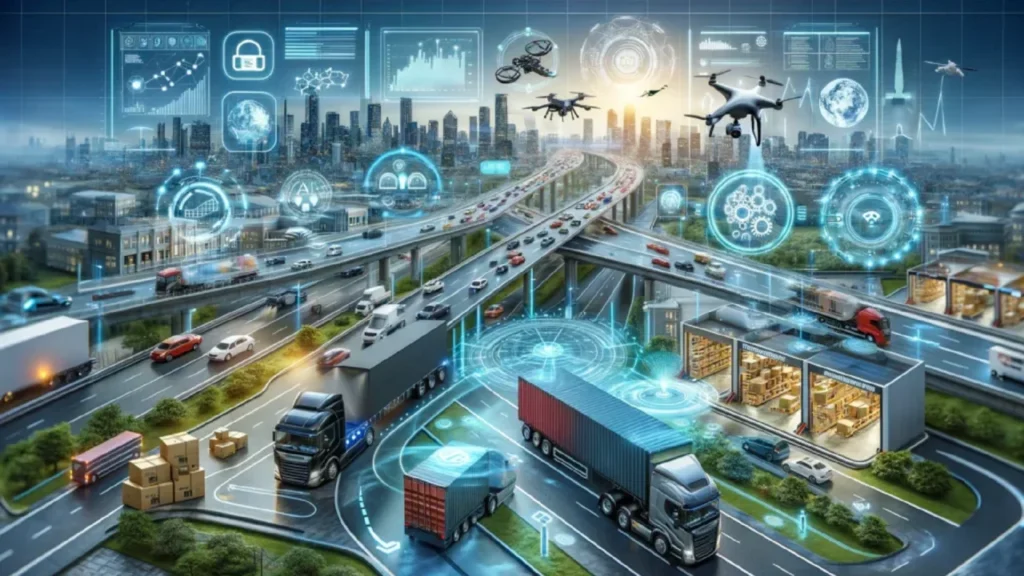
Multimodal transportation refers to logistics and transportation processes that require several transportation methods and can be a combination of two or more modes of transportation such as road, rail, sea, or air transportation. for example, a shipment to move from an origin to a destination may require rail transport, sea transport as well as land transport. These are three modes of transportation that are combined and used for one move.
Combined transport is carried out by a transport operator (carrier) who relies on a network of transport agents or carriers. However, this process for the sender who chooses multimodal transportation is a single contract process that is concluded with the carrier, and in such a position, the carrier is solely responsible and accountable to the customer, but separately for each section, he concludes a contract with the transport agents and demands responsibility from them.
“International multimodal transport means the carriage of goods by at least two different modes of transport under a multimodal transport contract from a place in the same country where the goods are transported by a multimodal carrier to a designated place of delivery.”
Meran Blue Gulf
Contracting with just one carrier instead of multiple carriers is why companies can choose multimodal transportation. Next, we look at other advantages that this type of transportation can provide.
History of international multimodal transport
The process of multimodal transportation is actually rooted in the revolution of container transportation, which was created with the development of RO-RO ships, multi-purpose vessels and the transportation of trucks in these vessels, as a bridge connecting land to sea and vice versa.
The use of containers provided conditions for the transfer of cargo from one mode of transportation to other modes of transportation, while the container provided a tool by which the cargo could be moved by all modes of transportation.
In the 1950s, shippers began to use containers, a tool that provided special economic and operational advantages to shippers. The introduction of the container into the transportation system made the cargo transportation process reach a high level of standard.
In addition, those involved in this process were able to handle many technical problems related to the transfer of goods by ship or other vehicles. Currently, the combination of transportation, which is known as combined transportation (multimodal transportation), is one of the most common methods of international transportation.
Advantages of multimodal transportation

Due to the development of global trade, multimodal transportation has managed to find a great place in the transport industry and has paved the way for international trade for governments and businessmen. The importance of this issue stems from some advantages of multimodal transportation, some of which we have mentioned below:
- High flexibility and the ability to choose the best transportation method for each part of the route
- Increasing the speed of goods transportation
- Reduce shipping costs
- Increasing product safety and security
- Better protection of goods during transportation
- Saving time (reducing goods transit time and reducing administrative paperwork)
- Signing a single contract with a transport company or forwarder and finally reducing the responsibility of customers and owners of goods
- Reducing environmental pollution
The use of combined shipping transportation can help to optimize the time and cost of transportation, because different means are used with different time trees and costs. For example, shipping by ship may be cost-effective for long distances and moving large volumes of cargo, while using trains or trucks may be optimal for local and short-distance transportation.
Among other advantages of combined shipping transportation, we can mention the reduction of environmental pollution, improvement of economic productivity and protection of natural resources. This method allows transportation companies to use the best means of transportation for each leg of the journey based on specific needs.
Types of methods used in multimodal transportation
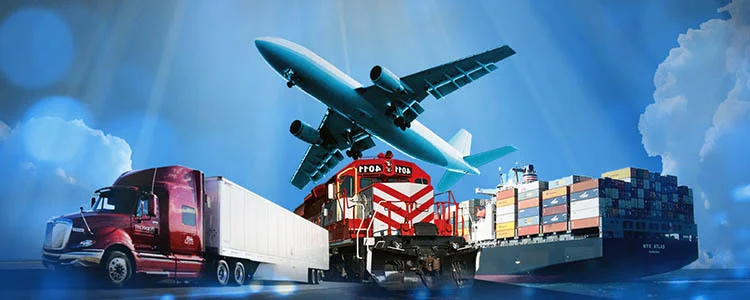
Land-Sea-Land:
This method of transportation is that the empty container is received from the container yard and sent to the seller’s warehouse by truck, and after loading, it is transported to the port. After being placed inside the ship and sent to the destination port, it is unloaded from the ship and sent to the railway by trucks or special container wagons. After traveling a distance by train, it is transferred to the receiving warehouse either directly or by truck.
Air-Road:
In this way, a truck is used to transport cargo to its destination after traveling a distance by plane.
Sea-Air:
This method is a combination of sea transportation and then air transportation, which has a speed beyond sea transportation and a lower price than air transportation.
Sea-Air Hubs:
In air-sea hubs, cargoes arriving at the port are transferred to the airport within one or two hours after the ship’s arrival and they leave for their destination by air on the same day.
Roll on Roll Off:
This method is used to transport trucks and cars by sea and road.
Lash System:
In this way, the barges that moved to the open waters after loading are placed on the deck of the big ships, and after crossing the ocean, they re-enter the inland waterways and continue their journey alone.
The difference between multimodal transport and intermodal transport
The movement of goods (in a loading unit or a vehicle) by successive transport methods without moving the goods themselves when changing modes is called intermodal transport. It should be noted that the vehicle can be a road or rail vehicle or a ship.
The biggest difference between multimodal transportation and intermodal transportation is the reloading and distribution or non-distribution of goods when moving from one mode of transportation to another. If the transport is carried out by several vehicles but without opening the container, it is called intermodal or (Intermodal), on the other hand, if the container is opened and the contents of the container are unloaded and reloaded, then transported by another mode of transport, it is called multimodal or combined transport.
Sea transportation is one of the most common methods of international transportation, which has a special place in the combination of transportation and is one of the most important communication routes in multimodal transportation.
Factors affecting the cost of combined transportation
The cost of combined transportation is determined depending on various factors such as distance, transportation by land, sea, air, type of cargo, weight of cargo, size of cargo, type of vehicle, speed of movement, etc.
Other factors such as the cost of gasoline and diesel, vehicle maintenance and repair costs, cargo packaging costs, loading and unloading costs, international transportation insurance costs, and employee salaries are also influential in the cost of combined transportation.
Combined transport applications

Combined transportation refers to the use of several different transportation methods to move goods from origin to destination. This method offers a combination of the advantages of each of the transportation methods and, as a result, brings flexibility and higher efficiency to the logistics process. In general, combined shipping is used when:
- Long distance: For long distances, it is usually more economical and efficient to use a combination of transport methods, such as sea or rail transport for long stretches and road transport for shorter stretches.
- Multiple destinations: If the goods are sent to several different destinations, combined transport allows for more efficient distribution of the goods.
- Infrastructural limitations: In areas where the transport infrastructure is not complete, combined transport can be used as an alternative solution.
- Reducing costs: Combined transportation can help reduce transportation costs, because according to the type of goods and the route, the most suitable transportation method can be used for each part of the route.
- Increased speed: In cases such as fast shipping from China where delivery time is very important, combined transportation allows the use of the fastest transportation methods for different parts of the route.
General conclusion
Transportation networks are responsible for delivering final goods and services as well as production inputs from supply sources to consumers and demanders. Meanwhile, the combination of transportation, the combined transportation method has provided an ideal opportunity for global trade due to its advantages over other transportation methods.
In another respect, the geographical and strategic position of Iran is unique for being in the multimodal transport route, while the security of Iran’s route for the passage of commercial cargoes is the basis for the development of combined transport.
Frequently asked questions about What are the advantages of multimodal transport
What is the difference between multimodal and intermodal transport?
Multimodal transport involves using multiple modes of transport under a single contract, while intermodal transportation uses multiple modes under separate contracts for each mode. To learn more, see our article on Intermodal vs. Multimodal Transportation.
What is an example of multimodal transportation?
An example is a product shipped overseas via a ship, offloaded at a port, transported by rail to an inland terminal, and delivered by truck to the retailer. Public transportation can also fit this definition.
What is the role of multimodal transport?
Multimodal transport (as opposed to multimodal shipping) facilitates efficient and flexible movement of goods using a combination of transportation modes, optimizing cost, speed, and reach.