Logistics and transportation are different from each other. It doesn’t matter how many times, in what situations and by which people these terms have been mistakenly used interchangeably, or even maybe you yourself have looked at these two terms in the same meaning, but these two terms are different from each other. And in use, they deal with different operations from each other.
A common misconception among people is not distinguishing between logistics and transportation, and these two words are usually used interchangeably. However, there are fundamental differences between logistics and transportation. Logistics and transportation each have their own conditions, standards, and procedures, which are considered to be the difference between logistics and transportation. If you do not have detailed information about logistics and transportation, the following text is written for you to learn the difference between these two methods.
transportation Vs Logistics
We have often heard that logistics and transportation are used in the same sense. But in fact it is not the same. In this article from Meran Group, we are going to examine the difference between logistics and transportation. For this purpose, it is necessary to know the meaning of each one first.
Stay with us to check each one separately, in the first step, we will define each one and then we will go to the details related to Logistics and freight.
What is transportation?
In general, transportation means moving any type of goods from one point to another. If you have a load and want to deliver it to a place, you need to get the help of freight companies. Such companies deliver various goods and furniture to their destination in a safe way.
The most important feature of reputable shipping companies compared to regular carriers is their credibility, which makes the owners of the goods entrust their goods to them without any worries. Another very attractive feature of transportation companies that has increased their fans is that they send customers’ goods to other countries as well.
Carriers issue valid insurance and bill of lading for cargo transportation. Therefore, the cost of transportation insurance and bill of lading will be added to the freight fare, and in return, it will ease your mind about safe and secure transportation.
Types of transportation
After you understand what transportation is and what services it provides to applicants, you should know that these companies have different types, and we will name each of them in detail below.
transportation companies deliver goods to their destination by land, air or sea:
- Ground freight: As the name suggests, in this type of freight, the goods reach their destination by ground method and using different loads. This type of freight includes sending goods by train, which of course depends on the conditions and volume of the goods. You can get more information about this in the article What is ground transportation.
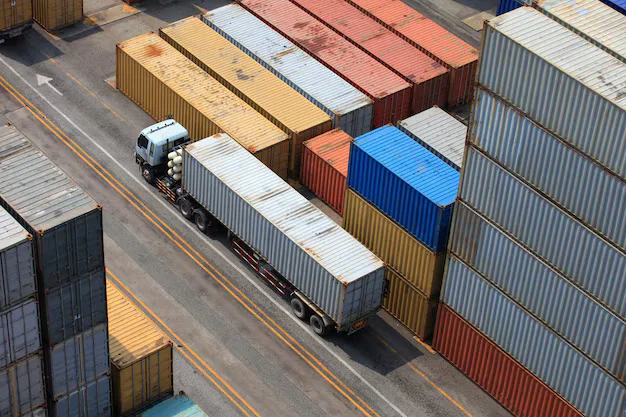
- Air freight: In very long distances, freighters use air transportation instead of road transportation. This method is the fastest shipping method and is used for goods that require fast delivery. Air freight makes transportation easier, faster and safer.

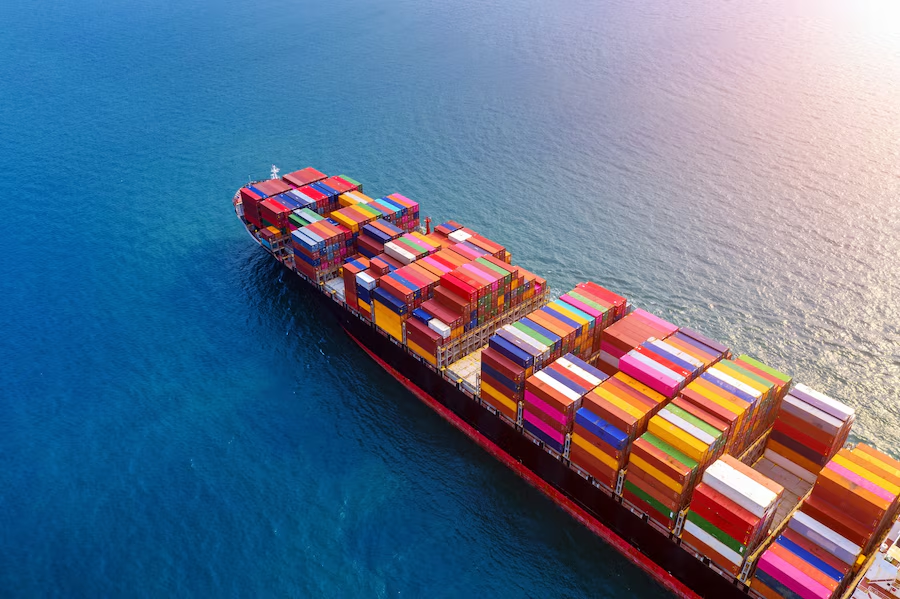
- ocean freight: When the origin and destination have water borders, a very large volume of cargo is carried out by ship and the cargo is delivered to the destination.
What is Logistics?
Logistics is the process of supply, production and distribution of materials and products with appropriate quality for an end user. It also includes the science of planning to manage and implement procedures to achieve the most efficient and effective methods of warehousing and transporting goods and services. Services, goods and other information are sent from the point of origin or the producer to the destination point or the consumer through logistics channels to meet the customer’s needs in the most optimal way possible.
In logistics processes, benefits and functions have been added that are different from transportation services. Logistics managers should make decisions based on the determining factors in packaging, product containerization (loading), documents and insurance, warehousing, import and export, regulations and cargo damage. They also deal with key partners, obligations to manufacturers, managing vendors and partners, and mitigating risk in operations.
For example, it has definitely happened to you or your loved ones to buy a product online. The company or organization that has accepted your order must first have that product in its warehouse or produce it according to the amount of your order. Also, the product quality must be acceptable and healthy.
After the ordering process, the issue of sending the product and delivering it to the customer comes up. Transportation is of great importance in this process and should occur in its most optimal state. At the last stage, after going through this cycle, in which there are very important details, the goods will reach you.
The point that is important here is the accurate management and support of this system. The set of these processes, which includes supply, production and distribution of goods, products, services or information inside and outside organizations, is called logistics.
What is the purpose of logistics?
In the previous section, we tried to express the concept of logistics in depth. But the question that comes up is what is the purpose of logistics? Why should organizations strive to improve their logistics network?
Certainly, in every supply chain, reducing the costs of the organization has a high importance. By improving the cycle of procurement and production, storage and distribution, these costs are significantly reduced. Logistics and the use of logistics methods in the supply chain make this possible.
1. practical planning
Logistics planning includes the acquisition of products, suitable storage facilities for the storage of goods, before leaving the factory door and delivery to the end users, and the optimized transportation system of the products to the end users.
2. Automation
Automation has a vital place in optimization. Because with automation, less manpower is needed and it accelerates the implementation process of various work steps. It should be noted that since in automation, the role of human power becomes less, the percentage of human error also decreases.
3. team work
It is an essential aspect of any organization. Responsible for the growth of any company is its team. The importance of a dynamic team in logistics can be realized by training employees and having a logistics manager with interpersonal skills. This training should cover the entire team, from the delivery person to the warehouse manager and the middle managers of the logistics team.
4. Warehouse management
It is a very important part of effective logistics management. Optimizing warehouse operations and processes depends as much on logistics managers as it does on the type of goods to be stored.
5. Correct optimization of the logistics network
When the logistics manager applies new strategies in the system, he must analyze the output of these strategies and the efficiency and effects they have on the system and its efficiency. Fundamental and correct analysis plays a fundamental role in determining the success or failure of a company.

The difference between logistics and transportation
With the definitions of transportation and logistics, we can now easily check the difference between the two. As we said, transportation includes the process of moving goods. While logistics includes a much larger range of affairs. In other words, transportation is a part of the huge logistics system and completes this big puzzle.
The transportation industry is an important and significant part of the logistics industry. Logistics improves the functioning of organizations by managing the supply chain and transportation. In other words, the activities that take place in the field of transportation are a subset of the logistics industry. As a result, despite their differences, logistics and transportation are closely related to each other.
If we want to name the activities of the logistics field case by case, it includes the following:
- Demand forecasting
- Integration and storage
- sorting
- Arrangement and packaging
- Managing relationships with customers and vendors
- Order management
- Handling and transportation
- Inspection
- Transport management
- Customs clearance matters
- Warehousing
- Matters related to risk reduction
- Goods distribution activities
As it is clear, matters related to planning and implementation are in the field of logistics and matters related to the distribution of goods are in the field of transportation.
connection between logistics and transportation
Now that we understand the difference between logistics and transportation, we should know that the relationship between these two areas has a great impact on the supply chain. The transportation system accounts for a third of the costs in the logistics system. As a result, it is very effective in the logistics network of organizations and is considered a key element.

In the logistics process, before the start of transportation operations, plans are made in order to optimize and speed things up as much as possible. This can be very useful for businesses and consumers. The existence of an optimal and standard logistics system can even have a tremendous impact on the economy of countries. On the other hand, if the transportation system is not suitable and efficient, the entire supply chain and logistics system will be violated.
conclusion
The difference between logistics and transportation is in the application and operation of each of them. So that transportation systems are part of the overall logistics operation. In other words, logistics includes the supply of materials and products needed for production, transportation of these products to the factory, storage process and transportation of final products and their delivery to end users. In this chain of activities, which is related to logistics, only specific parts are addressed to transportation. The transportation process includes moving a product or service from one place to another.
The more each of these processes are optimized, the efficiency of the whole system will be higher and as a result, the costs will be reduced, the speed of operation will be increased, the quality of transportation and distribution services will be increased, more satisfaction will be gained from the customers and in Finally, the profitability of the company increases.
New technologies can be considered as the main factor of improvement and optimization of this industry. Therefore, it is very important to use these types of technologies and the flexibility of senior managers in logistics and transportation systems in response to changes. So that the survival and success of the system owes to the correct performance in this field.