Augmented Reality (AR) is no longer a futuristic concept confined to gaming and entertainment; it has emerged as a game-changing technology in the supply chain and logistics industry. By overlaying digital information onto the physical environment, AR provides real-time, contextual data that enhances decision-making, improves accuracy, and accelerates operational workflows. This comprehensive analysis explores the multifaceted advantages of AR implementation, supported by industry case studies, statistical data, and expert insights, while addressing implementation challenges and future trends that will shape the logistics landscape through 2025 and beyond.
The Digital Transformation Imperative
The global supply chain industry faces unprecedented challenges: rising customer expectations for faster delivery, increasing operational costs, labor shortages, and growing complexity in inventory management. Traditional methods of warehouse operations, inventory tracking, and transportation management are proving inadequate in this dynamic environment. According to a 2024 Gartner report, 65% of logistics companies are actively investing in digital transformation technologies, with AR positioned as one of the top three priorities for operational enhancement.
Augmented Reality bridges the gap between digital data and physical operations, creating an immersive, interactive workspace where information is accessible exactly when and where it’s needed. Unlike Virtual Reality (VR), which creates entirely simulated environments, AR enhances the real world with digital overlays, making it particularly suitable for logistics applications where workers must interact with physical objects while accessing digital information.
Core Advantages of AR in Supply Chain Operations

1 Revolutionizing Warehouse Operations and Order Fulfillment
Warehouse efficiency directly impacts customer satisfaction and profitability. AR transforms traditional picking, packing, and put-away processes through:
Visual Picking Systems: AR-enabled smart glasses or mobile devices display visual cues that guide workers to exact item locations. DHL’s Vision Picking program, implemented across multiple fulfillment centers, has demonstrated remarkable results:
- 40% increase in picking accuracy
- 25% reduction in training time for new employees
- 15% improvement in overall productivity
The system highlights the correct bin with colored indicators, displays item quantities, and provides verification prompts, virtually eliminating picking errors that traditionally account for 3-5% of warehouse costs.
Dynamic Put-Away Optimization: AR systems analyze incoming inventory and suggest optimal storage locations based on item dimensions, weight, turnover rate, and compatibility with nearby products. This intelligent placement reduces retrieval times and maximizes storage density.
Real-Time Inventory Visualization: Warehouse managers can use AR dashboards to visualize inventory levels, identify slow-moving stock, and detect potential stockouts before they occur. As noted by supply chain expert Dr. Elena Rodriguez:
AR provides a living map of warehouse operations, transforming static inventory data into actionable intelligence that flows with the rhythm of daily operations.
2 Enhancing Transportation and Last-Mile Delivery
The transportation segment benefits significantly from AR applications:
Intelligent Loading Assistance: AR systems project optimal loading patterns onto truck beds or containers, considering weight distribution, delivery sequence, and item fragility. This reduces loading time by approximately 30% and minimizes damage during transit.
Navigation and Route Optimization: Delivery drivers equipped with AR-enabled devices receive real-time navigation overlays that highlight optimal routes, traffic conditions, and delivery sequence. UPS’s ORION (On-Road Integrated Optimization and Navigation) system, enhanced with AR capabilities, has achieved:
- 10-15% reduction in fuel consumption
- 8-12% decrease in mileage
- 20% faster delivery times in urban areas
Proof of Delivery Enhancements: AR applications can capture delivery confirmations with geotagged photos and digital signatures, automatically updating tracking systems and reducing administrative overhead.
3 Transforming Maintenance and Quality Control
Preventive maintenance and quality assurance are critical components of logistics operations:
Guided Maintenance Procedures: Technicians performing equipment maintenance can access AR overlays that highlight components, display step-by-step repair instructions, and provide safety warnings. Boeing’s use of AR for aircraft maintenance has reduced wiring installation time by 25% and error rates by 40%—principles directly applicable to logistics equipment maintenance.
Quality Inspection Augmentation: AR systems superimpose quality standards and specifications onto physical products, enabling inspectors to identify defects more accurately and consistently. This is particularly valuable for temperature-sensitive pharmaceuticals and high-value electronics in cold chain logistics.
MORE: Digital Twins in Trade Logistics: The Future of Global Supply Chains
2: Implementation Case Studies and ROI Analysis
1 Amazon’s AR-Powered Fulfillment Centers
Amazon has deployed AR technology across multiple fulfillment centers through its AR Smart Glasses initiative. The implementation includes:
- Visual Picking: Workers receive hands-free instructions through AR glasses, with items highlighted in their field of view
- Path Optimization: The system calculates the most efficient route through the warehouse based on order composition
- Quality Verification: AR overlays compare picked items against digital images to ensure accuracy
Results: Amazon reported a 35% increase in picking speed and a 50% reduction in training time for seasonal workers. The ROI was achieved within 8 months of implementation, primarily through reduced labor costs and improved accuracy.
2 DHL’s Global AR Implementation
DHL’s “Vision Picking” program represents one of the largest AR deployments in logistics:
- Scale: Implemented across 15 distribution centers worldwide
- Technology: Uses Google Glass Enterprise Edition and proprietary software
- Integration: Connects directly with warehouse management systems (WMS)
Quantitative Benefits:
- Error reduction: From 1.5% to 0.1% in picking operations
- Training acceleration: New workers reach full productivity in 2 days instead of 2 weeks
- ROI: 12-month payback period with ongoing annual savings of $400,000 per facility
3 Maersk’s Container Yard Optimization
Maersk implemented AR technology in container terminals to streamline operations:
- Container Identification: AR glasses automatically identify container numbers and locations
- Stacking Optimization: Suggests optimal stacking patterns based on weight, destination, and retrieval schedule
- Safety Monitoring: Highlights potential hazards in the yard environment
Outcomes: 20% improvement in container handling efficiency and 30% reduction in equipment idle time.
3: Technical Implementation Framework
1 Hardware Options and Selection Criteria
Successful Augmented Reality implementation requires appropriate hardware selection:

2 Software Integration Requirements
Effective AR systems must integrate seamlessly with existing infrastructure:
- Warehouse Management Systems (WMS): Real-time data exchange for inventory and order information
- Enterprise Resource Planning (ERP): Integration with procurement, finance, and customer data
- Transportation Management Systems (TMS): Route optimization and delivery scheduling
- Internet of Things (IoT) Platforms: Connection with sensors for real-time environmental data
3 Data Security and Privacy Considerations
AR systems handle sensitive operational data requiring robust security measures:
- End-to-end encryption for data transmission
- Role-based access controls
- Regular security audits and updates
- Compliance with data protection regulations (GDPR, CCPA)
4: Challenges and Mitigation Strategies
MORE: Digital Twins in Trade Logistics: The Future of Global Supply Chains
1 Implementation Barriers
Despite clear benefits, organizations face several challenges:
High Initial Investment: AR hardware and software development require significant capital expenditure. Mitigation: Start with pilot programs targeting high-ROI use cases, consider hardware-as-a-service models, and leverage government digital transformation grants.
Integration Complexity: Connecting AR systems with legacy infrastructure can be technically challenging. Mitigation: Adopt modular implementation approaches, use API-first platforms, and consider middleware solutions.
User Adoption Resistance: Employees may resist new technology due to comfort with existing processes.Mitigation: Implement comprehensive change management programs, involve end-users in design phases, and provide extensive training and support.
Technical Limitations: Current AR technology faces limitations in outdoor visibility, battery life, and processing power. Mitigation: Select appropriate hardware for specific use cases, implement charging stations strategically, and leverage edge computing for processing-intensive applications.
5: Future Trends and Evolution
1 Convergence with Complementary Technologies
The future of AR in logistics lies in integration with other emerging technologies:
- AR + Artificial Intelligence: AI algorithms will enhance AR systems with predictive analytics, intelligent recommendations, and adaptive learning based on user behavior patterns.
- AR + Internet of Things: IoT sensors will provide real-time environmental data (temperature, humidity, vibration) that AR systems can visualize for immediate action.
- AR + Digital Twins: Creating virtual replicas of physical logistics networks will enable simulation and optimization before implementing changes in the real world.
- AR + 5G Networks: Ultra-low latency 5G connectivity will enable more complex AR applications with real-time collaboration across multiple locations.
2 Market Projections and Adoption Timeline
According to MarketsandMarkets research, the Augmented Reality in logistics market is projected to grow from $1.8 billion in 2024 to $12.4 billion by 2029, representing a **compound annual growth rate (CAGR) of 47.2%. Adoption will follow this trajectory:
- 2024-2025: Early adopters expanding pilot programs
- 2026-2027: Mainstream adoption in large enterprises
- 2028-2030: Widespread implementation across small and medium enterprises
6: Strategic Implementation Roadmap
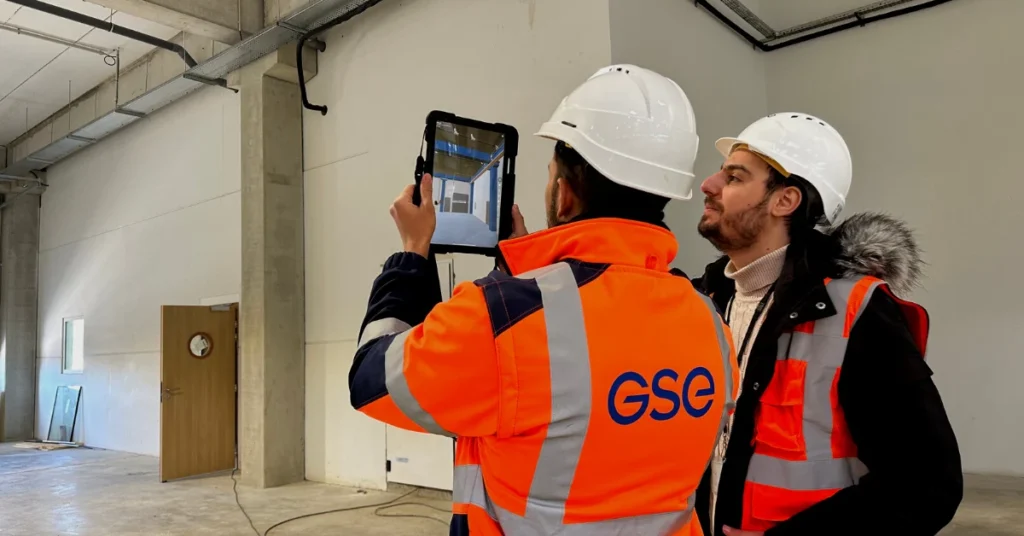
For organizations considering AR adoption, we recommend this phased approach:
Phase 1: Assessment and Planning (Months 1-3)
- Conduct needs analysis and identify high-impact use cases
- Evaluate existing infrastructure and integration requirements
- Develop business case with ROI projections
- Select pilot project and define success metrics
Phase 2: Pilot Implementation (Months 4-6)
- Deploy limited-scale Augmented Reality solution
- Train users and gather feedback
- Measure performance against baseline
- Refine processes and technology configuration
Phase 3: Scaling and Optimization (Months 7-12)
- Expand implementation to additional departments/locations
- Integrate with enterprise systems
- Establish continuous improvement processes
- Develop internal expertise and support structures
MORE: Smart Transport: The Future of Intelligent Mobility and Logistics
Conclusion
Augmented Reality represents a paradigm shift in how supply chain and logistics operations are conducted. By bridging the digital and physical worlds, AR enhances accuracy, efficiency, and safety while reducing costs and training time. While implementation challenges exist, they are outweighed by the substantial benefits demonstrated by early adopters.
As the technology matures and becomes more accessible, AR will transition from a competitive advantage to an operational necessity in the logistics industry. Organizations that embrace this transformation today will be better positioned to navigate the complexities of global supply chains tomorrow.
The digital transformation of logistics is inevitable, and Augmented Reality stands at the forefront of this revolution. Begin your AR journey today with a strategic assessment of high-impact applications within your operations. Our consulting team specializes in AR implementation for supply chain optimization and can guide you through every phase of adoption. Contact us for a complimentary feasibility analysis and discover how AR can transform your logistics operations.
Resources:
- Gartner: “Augmented Reality in Supply Chain” (2024 Report)
- MIT Technology Review: “How AR is Transforming Warehouse Operations”
Frequently Asked Questions (FAQ)
What is the typical ROI timeline for AR implementation in logistics?
Most organizations achieve ROI within 12-18 months through labor savings, error reduction, and productivity improvements. The exact timeline depends on implementation scale and specific use cases.
Can Augmented Reality systems function in environments with poor connectivity?
Modern AR solutions incorporate edge computing capabilities that allow core functions to operate offline, with data synchronization occurring when connectivity is restored.
How does AR compare to traditional barcode scanning systems?
AR enhances rather than replaces barcode systems. While barcodes provide identification, AR adds contextual information, navigation guidance, and procedural instructions in a visual format.
What training is required for employees to use AR systems effectively?
Most AR systems are designed for intuitive use, requiring 1-3 days of training for basic operations and 5-7 days for advanced functionality. Continuous learning is supported through the AR system itself.
Are there industry-specific regulations governing AR use in logistics?
While no AR-specific regulations exist, implementations must comply with general workplace safety, data privacy, and equipment certification requirements applicable to each jurisdiction.