The International North–South Transport Corridor (INSTC) is one of the most ambitious and strategic trade routes in the world. Designed to connect India, Iran, Russia, and Europe through a multi-modal network of sea, rail, and road transport, this corridor significantly reduces the time and cost of moving goods between South Asia, the Middle East, and Europe.
Meran Trading Company with years of brilliant history in the field of import, export, clearance of goods as well as domestic and foreign trade services.
As global supply chains search for faster, more reliable, and cost-effective alternatives, the INSTC has emerged as a vital route for international transit and logistics.
What is the International North–South Transport Corridor (INSTC)?
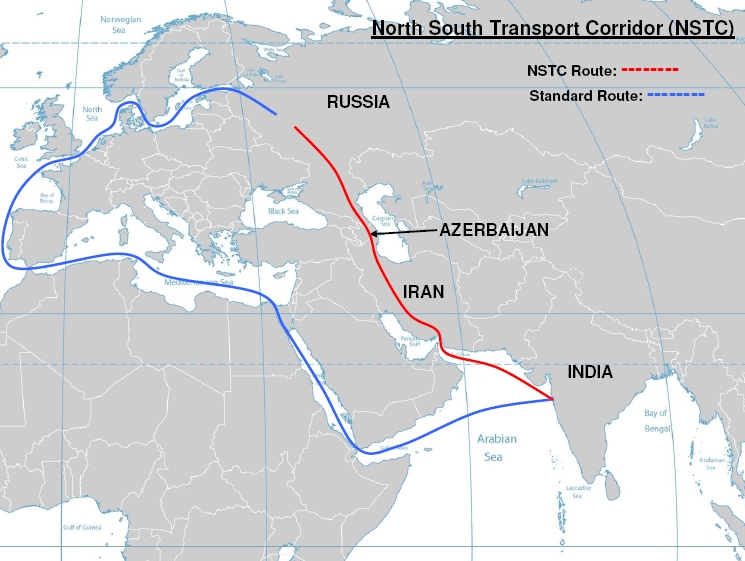
The INSTC is a 7,200 km multi-modal transportation network established by an agreement between India, Iran, and Russia in 2000. It has since expanded to include 13 member countries, with the aim of promoting trade connectivity and regional integration.
- Route: Starting in India (Mumbai), passing through Iran (Bandar Abbas / Chabahar), crossing the Caspian Sea, and reaching Russia and Northern Europe.
- Transport Modes: Sea + Rail + Road.Key Objective: To reduce transit time and costs compared to traditional routes such as the Suez Canal.
Benefits of the INSTC
- Time Efficiency
Cuts transit time from 40–60 days to 20–25 days compared to the Suez Canal route.
- Cost Reduction
Reduces transportation costs by nearly 30%, making it attractive for exporters and importers.
- Strategic Trade Advantage
Enhances trade between India, Central Asia, the Middle East, and Europe.
- Diversification of Routes
Reduces dependency on congested or politically sensitive shipping lanes.
Role of Iran in the INSTC
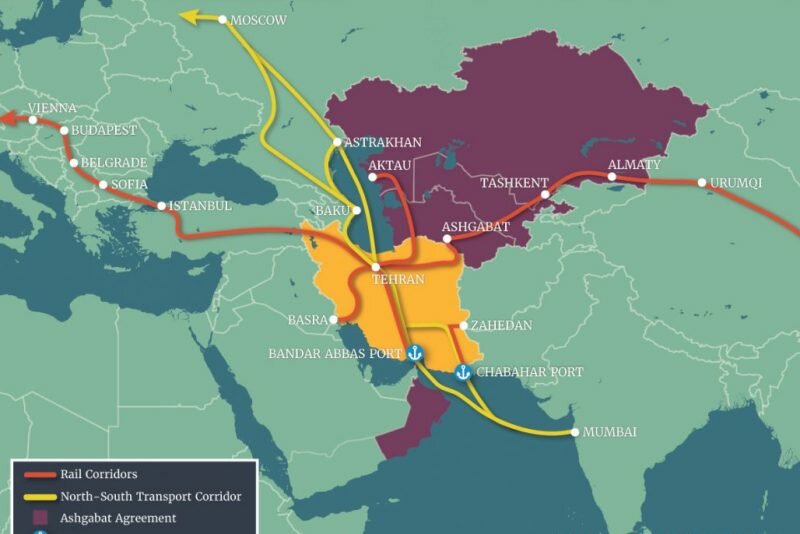
Iran is the core transit hub of the INSTC due to its strategic location and infrastructure:
- Bandar Abbas Port: Gateway for goods entering from India.
- Chabahar Port: Provides an alternative access point for India to bypass Pakistan.
- Railway Links: Connecting the Persian Gulf to the Caspian Sea and onward to Russia.
Iran’s central position ensures that the INSTC cannot function effectively without its infrastructure and transit cooperation.
Challenges Facing the INSTC
- Infrastructure Gaps
Some railway connections in Iran and the Caspian region require further development.
- Geopolitical Issues
Sanctions on Iran and regional conflicts can hinder smooth operations.
- Bureaucratic Barriers
Customs and regulatory differences among member states.
- Competition
Other emerging corridors such as China’s Belt and Road Initiative (BRI) compete for global trade flows.
MORE: What is security in freight?
Future Outlook INSTC

The INSTC is expected to play a major role in global logistics over the next decade:
- Boosting India–Europe trade by providing a faster and cheaper alternative to maritime routes.
- Strengthening regional integration among Eurasian countries.
- Supporting energy and resource exports from Russia and Central Asia.
- Encouraging infrastructure investments in ports, railways, and digital customs systems.
As global supply chains adapt to changing geopolitical and economic realities, the INSTC is likely to emerge as a key artery for international trade.
Conclusion
The International North–South Transport Corridor (INSTC) is more than just a logistics project—it is a strategic trade revolution. By cutting costs, reducing transit times, and offering an alternative to traditional shipping routes, it has the potential to transform global trade flows.
Despite challenges like infrastructure gaps and political risks, the INSTC represents a unique opportunity for businesses to optimize their supply chains and access new markets.
Looking to expand your international trade and logistics operations?
Our team offers professional transit, customs, and freight solutions along the INSTC route through Iran.
Contact us today to discover how the INSTC can accelerate your global supply chain
(INSTC) FAQs
What countries are part of the INSTC?
Initially signed by India, Iran, and Russia, the corridor now includes 13 member countries such as Azerbaijan, Armenia, Kazakhstan, and others.
How much time does the INSTC save compared to the Suez Canal route?
It reduces transit time from around 40–60 days to 20–25 days.
Why is Iran important in the INSTC?
Because it provides the main transit infrastructure (ports and railways) linking the Indian Ocean to the Caspian Sea and Russia.
What are the main challenges of the INSTC?
Infrastructure development, sanctions, customs delays, and competition from other corridors.